.png)

5 Days in Belgium (Brussels, Bruges, Ghent & Antwerp) - June 2026

Many people ask me why I chose to visit Belgium—it is not a usual pick, and it can seem a little boring at first. But it has quickly become one of my favourite countries in Europe.
Belgium is unique in that it is made up of three regions, each with its own language (German, French and Flemish). The people are incredibly friendly and almost everyone speaks English, which made it very easy to interact with the locals. The country itself is also fairly small, so getting around during my five-day trip was completely seamless.
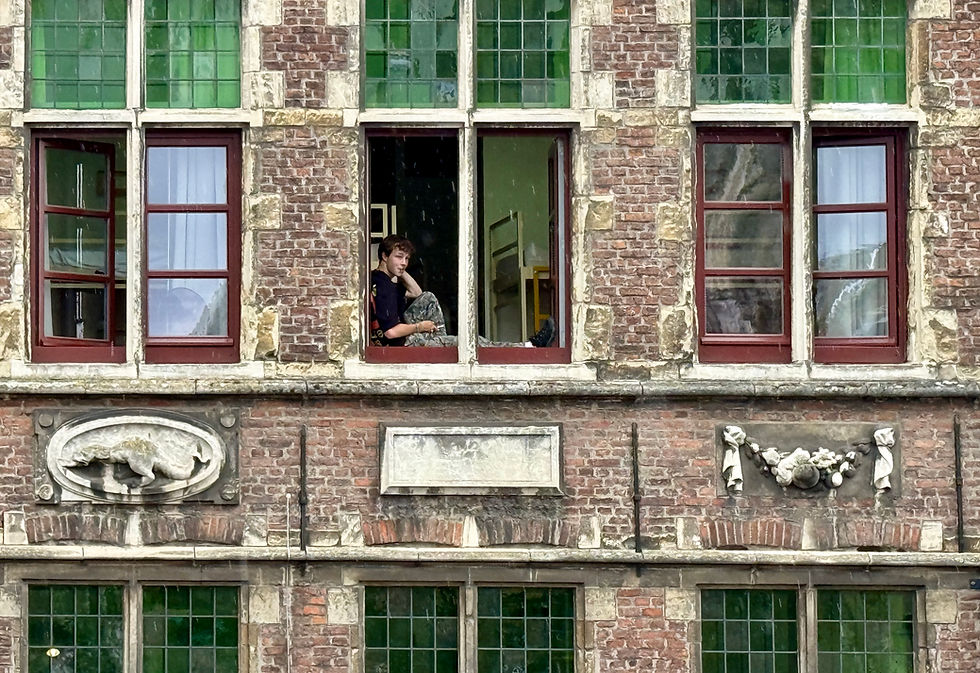
With its excellent public transport and welcoming people, Belgium really does feel like the best of both worlds—the good looks of the Dutch, the efficiency of the Germans and the fun of the French. I am definitely looking to come back.

Travel and Tips
Brussels has a great public transport system and it costs around €3 per trip, which you can pay for simply by tapping your contactless credit card as you board. I found this the most convenient option, as the city is small enough that a full-day pass isn’t really worth it. Uber is also fairly affordable, especially when you are travelling with large luggage—European pavements are not exactly made for easy wheeling.

Domestic trains are easy too, and you can just buy your tickets from the machines in the stations. There is no need to pre-book, as seats are not reserved.
Fast Track is available at certain European airports for €15. It lets you speed through security (though not immigration). You can decide whether to use it on the spot once you see the queue, so there is no need to pre-book.
Day 1: Brussels
Accommodation: Made in Catherine
Although it is on the other side of the city, the hotel sits in one of the most vibrant areas for food and drink. It is only 15 minutes from the city centre, and the Sint-Katelijne (Sainte-Catherine) area is very convenient while still being away from the hectic Central train station (occasional demonstrations do happen here, as this is also where the EU Parliament is). The rooms are very spacious and clean, and the breakfast was simple but sufficient. My only comment is that I wish the shower pressure had been a little higher.
Website: madeincatherine.com
Morning City Walk (2 hrs)
It’s a habit of mine to always do a short walking tour with a local guide to get a sense of the scale of a new city. On this one we covered:
Grand Place
Galeries Royales Saint-Hubert (Galeria)
Delirium
Manneken Pis / Jeanneke Pis (Lady Pis)
Bru City
Brussels Stock Exchange (Bourse)
plus Others
Lunch: Nordzee
A small, al-fresco fish-market-style diner with a great selection of seafood served in various ways. The staff were extremely helpful and the food was top notch. I particularly liked the razor clams, and the escargot soup was interesting in a good way, with a bit of a kick to it—perfect for when it’s a little chilly out.
Snack: Chouke
This hole-in-the-wall frites shop was recommended by our tour guide. I asked for their most popular option, the Julienke (their version of poutine, with stewed beef and fried sausage). The sauce was pretty good, but the fries themselves were a little disappointing. The portion is hefty, so you can easily share it between two or three people as a snack.
Victor Horta: The Best of Belgian Art Nouveau
Belgium is the birthplace of Art Nouveau, and architect Victor Horta is its master. His flowing ironwork, stained glass and light-filled interiors define the movement, and several of his buildings are UNESCO World Heritage Sites. Together these spots make a great half-day for design lovers: the Horta Museum (his former home and studio), the recently restored Maison Hannon, and the Art Nouveau facades of nearby hotels.
Sites: Victor Horta Museum, Maison Hannon, Hôtel Savoy, Hôtel Tassel
Website: hortamuseum.be
Website: maisonhannon.be
Day 2: (Bruges & Ghent Day Trip, 12 hrs)
As my time was limited, and I didn’t particularly want to tick off every church and standard attraction, I decided to do a 12-hour tour of both cities by train. The timing worked perfectly—it gave me a good overview of each city while leaving enough time to explore the food scenes.
Bruges
Often called “the Venice of the North,” Bruges is one of the best-preserved medieval cities in Europe, and its entire historic centre is a UNESCO World Heritage Site. Cobbled lanes, picture-perfect canals, step-gabled houses and the towering Belfry make it feel like stepping into a fairytale. It was also a major centre for the Flemish Primitives, so the art and architecture run deep.
Lunch: Onslow
One of the best meals of my entire trip in Belgium. The kitchen takes an innovative approach to traditional ingredients, using international techniques—I loved the smoked sardine dish. They also have a really decent selection of non-alcoholic drinks.
Website: onslow.be
Ghent
Once one of medieval Europe’s most powerful cities, Ghent today is a lively university town with a beautifully preserved medieval core. Highlights include the imposing Gravensteen castle, the riverside Graslei and Korenlei quays, the three medieval towers, and St Bavo’s Cathedral, home to the world-famous Van Eyck altarpiece, “The Adoration of the Mystic Lamb.”
To be honest, it rained the whole time we were there and I feel we could have done more, so I definitely want to revisit.
Snack: Au Bon Vivant
Since there was a fish market nearby, I assumed the seafood in the area would be pretty good. This is essentially a bougie food-truck oyster bar—a great spot for people-watching, and Danny the owner is as cheerful as can be.
Snack: Australian Ice Cream Company
I trust the Australians when it comes to food, so I thought I would give this a go. It tasted good, but I’m not really a fan of sweets, so the ice cream and waffle were a little lost on me. That said, they do have good vegan options.
Dinner: Frites Atelier
As you can tell, I hadn’t stopped eating all day, so I kept dinner light and headed to one of the most popular spots in the city for fries. The flavour here is more refined, and the fries are far better than the ones at Chouke.
Website: fritesatelier.com
Nightlife: Delirium
One of the most famous bars in Brussels, holding the Guinness World Record for the number of beers on offer in one venue. As a tourist, naturally I went for the one-metre beer-taster platter—about 1.5 litres of beer in total. Some of the flavours were definitely on the sweeter side.
Website: delirium.be
Day 3: Brussels
Workout: F45 Brussels
I wanted to keep a bit of normality in my workout routine, and F45 has a location by Central Station. Just note that you are expected to bring your own towel at this particular venue.
Lunch: Ramen Yamato
By the third day I needed my Asian fix, so I opted for a ramen shop nearby. It did satisfy the craving, but truth be told the flavour was quite flat and the gyoza meat was a little too lean.
Musical Instruments Museum, Magritte Museum, Royal Museums of Fine Arts of Belgium
A trio of must-sees clustered around the Mont des Arts. The MIM is housed in a stunning Art Nouveau Old England building and holds a world-renowned collection of instruments. The Magritte Museum has the world’s largest collection of works by Belgian surrealist René Magritte. The Royal Museums of Fine Arts span six centuries of art, from Flemish masters such as Bruegel and Rubens to modern works.
Website: mim.be
Website: magrittemuseum.be
Website: fine-arts-museum.be
Vintage Furniture Street
One of the biggest second-hand markets in the world—honestly, I wanted to buy everything there. The main vintage furniture hunting area in Brussels is the Marolles district, especially around Rue Haute and Place du Jeu de Balle. Focus on Rue Haute and Rue Blaes for clusters of antiques and vintage design shops, including Cyclup Intérieur (67 Rue Haute) and Haute Antiques 207 (207 Rue Haute).
Here are a few shop recommendations:
Philippe Lange - Antiek vanuit de 20ste eeuw
Via Antica
Passage 125 Blaes
Haute Antiques 207
Dinner: Le Mignon
Fairly disappointing, but it was good enough for sustenance. Everything was a bit bland.
Nightlife: Cabaret Mademoiselle
A great little venue for queer performers. It was a bit of a slow start but it did get better. Dress light—the air conditioning wasn’t working when I visited and it got way too hot. It’s a great place to meet people. The shows are French-centric, but they do switch between English and French depending on the audience.
Website: cabaretmademoiselle.be
Day 4: Brussels to Antwerp
Murals of Brussels
Brussels is known for its street art and iconic comic-strip murals, so for my last morning in the city I decided to go on a bit of a mural hunt before catching my train to Antwerp.
Accommodation: Sapphire House Hotel
Part of Marriott’s Autograph Collection, Sapphire House is a five-star boutique hotel set in a beautifully restored historic building in the heart of Antwerp, just steps from the old Stock Exchange.
Architecture: The hotel occupies a building whose roots reach back to Antwerp’s 16th-century Golden Age, when it was a wealthy merchant’s residence known as the “Great Ruby.” It was rebuilt in the 17th century and given a Rococo makeover in the 18th, later serving as a bank headquarters before its restoration. It now forms part of the same landmark complex as the adjoining Stock Exchange (Handelsbeurs), so layers of Flemish, Rococo and neo-Gothic detail sit side by side.
The lobby is chic and the venue is full of history. There are different wings to the hotel, and to be honest my first room wasn’t ideal—it had a strange entry corridor that made the rest of the room feel very small. The staff were kind enough to move me, and the new room was much better.
Website: sapphirehouseantwerp.com
Lunch: Hoi An House
I needed another Asian fix, so I went for pho here. It’s one of the highest-rated spots in the area, and I really enjoyed what I had.
Antwerp City Walk
Antwerp is Belgium’s second city, famous as both the diamond capital of the world and a global fashion hub. Its historic centre is built around the Grote Markt, lined with ornate Renaissance guild houses and overlooked by the Gothic Cathedral of Our Lady, which houses several Rubens masterpieces. Compact, stylish and full of energy, it’s a wonderful city to explore on foot.
Kloosterstraat (Fashion Boutiques and Antique Shops)
A charming street in the old town packed with antique dealers, vintage shops, design stores and independent fashion boutiques. It’s the perfect place to browse for one-of-a-kind furniture, art and curiosities—and a favourite among design lovers.
MAS Museum
The Museum aan de Stroom (MAS) is a striking red-sandstone landmark in the old docklands, with stacked galleries that explore Antwerp’s connection to the world—port history, world cultures, life and death. The rooftop terrace offers free 360-degree views over the city and is worth the climb on its own.
Website: mas.be
Stock Exchange
Architecture: The Antwerp Handelsbeurs is often called the “Mother of all Stock Exchanges” — the original 1531 building was the world’s first purpose-built commercial exchange and became the model for the bourses of London, Amsterdam and Rotterdam. After fires destroyed earlier versions, the current building was completed in 1872 by architect Joseph Schadde. It is a remarkable mix of lavish historicist neo-Gothic stonework and pioneering engineering: the central trading hall is crowned by a richly decorated iron-and-glass roof that was highly progressive for its time.

Open to the public only on Saturdays and Sundays. It is now an impressive event venue. It sits right next to the Sapphire House and the two have a partnership, so on non-event days you can sometimes ask the concierge nicely and they may be able to let you in and show you around.
Dinner: Bistro Ernest
A lovely recommendation from a friend, serving innovative local dishes. I strongly recommend it, and they have a good selection of wines. Barry was very friendly and knowledgeable about the menu.
Website: ernestbistro.be
Nightlife: Dogma
A pretty relaxed cocktail bar with some of the best cocktails in town.
Day 5: Factory Visit and Antwerp
As I had a full day of factory visits in the morning and mid-afternoon, I only had limited time to see a few more things.
DIVA Museum
I found it a little boring, but since Antwerp is the city of diamonds I thought I would come and check it out.
Website: divaantwerp.be
Museum Plantin-Moretus
The only museum in the world inscribed on the UNESCO World Heritage List in its own right. Set in the original 16th-century home and printing workshop of Christophe Plantin, it preserves the world’s oldest printing presses, priceless archives and beautiful Baroque interiors—including a painting by Rubens.
It was closed when I went, so I didn’t manage to get inside, but I’ve heard great reviews of this printing museum.
Website: museumplantinmoretus.be
Cinq
Supposedly the best espresso martini in town, but it’s closed three days a week, so do check your timing. It’s located right by the Cathedral of Our Lady (the “Old Lady”).

De Muze
De Muze is one of Antwerp's most beloved institutions: a legendary jazz café that has been pulling crowds since it opened in 1964 (The World's 50 Best Discovery, Fever). Tucked away on the Melkmarkt right by the Cathedral of Our Lady, it carries serious heritage — it once hosted the likes of John Lee Hooker and Memphis Slim, and was so cherished that regulars rallied to save it from closure in 2014. Live music everyday apart from Sundays and Mondays.
Dinner: Bar Misera
One of the hottest elevated casual-dining restaurants in town right now—reservations are strongly recommended. It’s seafood-heavy, and I was surprised to find the place pretty busy on a Monday night, especially as it’s a little out of the way.
Website: barmisera.com
De Wilde Zee
A lovely commercial area with more upscale high-street brands.
Antwerp Central Station
Often ranked among the most beautiful railway stations in the world, Antwerp Central—nicknamed the “Railway Cathedral”—is a breathtaking blend of stone, glass and iron with a soaring domed hall. It’s worth a visit even if you’re not catching a train.
Hotel Amigo, a Rocco Forte hotel
I had to stay one night before my flight the next day in Brussels so I decided to treat myself.
Hotel Amigo is widely regarded as one of the very best luxury hotels in Brussels. Part of the Rocco Forte group, it's a 173-room, five-star property set in a roughly 500-year-old building whose name nods to its early-16th-century stint as a prison.
Althought the service really was impeccable, greeting me by my name as soon as I stepped off the taxi before I even checked in, the hotel rooms a very dated for a room costing about Euro500. I am pretty low maintainence when it comes to hotel services so Made in Catherine definitely was more my vibe.
End
Looking back, Belgium completely defied my expectations. What started as an unconventional choice quickly became one of my favourite trips in Europe — a country small enough to navigate with ease, yet rich enough to keep surprising me at every turn. From the Art Nouveau elegance of Brussels and the fairytale canals of Bruges, to the medieval charm of Ghent and the effortless style of Antwerp, each city had its own distinct character and rhythm. Add to that the warmth of the people, the seamless transport, the world-class beer and an endless run of memorable meals, and it's easy to see why I left already planning my return. Belgium really is the best of both worlds, and five days simply weren't enough. Until next time.


Comments